

Every morning, millions of potential customers turn to Google before making purchase decisions. They search for solutions, compare options, and choose businesses that appear credible and accessible. If your small business isn’t showing up in these critical moments, you’re invisible to buyers actively seeking what you offer.

SEO for small business transforms this dynamic entirely. Unlike paid advertising that drains budgets with every click, organic search visibility builds lasting equity in your digital presence. When executed strategically, search engine optimization delivers qualified traffic month after month without escalating costs.
The numbers tell a compelling story. Over 90% of online experiences begin with search engines, and 75% of users never scroll past the first page of results. For local businesses, the opportunity becomes even more pronounced- 46% of all Google searches have local intent. These aren’t casual browsers; they’re customers ready to buy, visit, or contact you immediately.
The Digital Shift: Why SEO is No Longer Optional
Consumer behavior has fundamentally changed how purchasing decisions unfold. Traditional advertising interrupts people during their daily activities. Search marketing connects you with prospects already looking for solutions you provide.
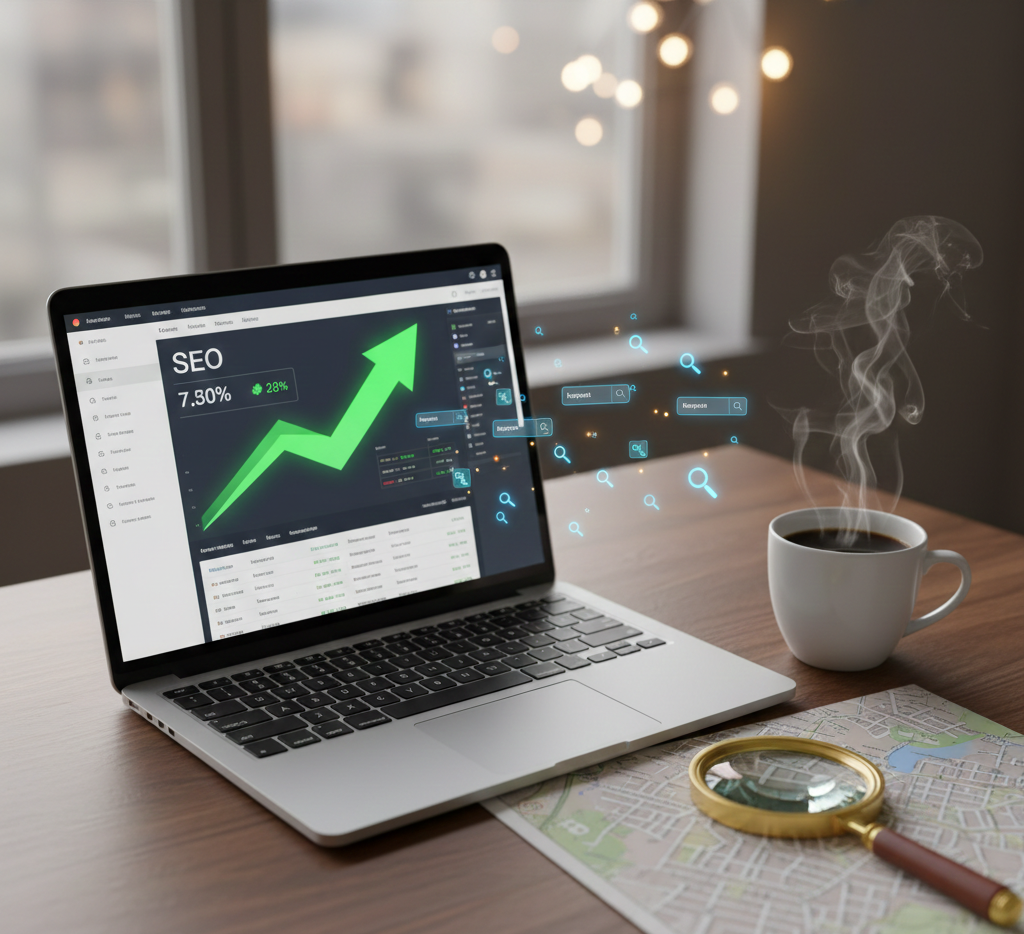
This distinction matters tremendously for resource-constrained small businesses. You can’t afford to waste marketing dollars on audiences who might never need your services. Organic search brings pre-qualified visitors who demonstrate clear purchase intent through their search queries.
The “Google First” Buyer Journey
Modern customers conduct extensive online research before contacting businesses or visiting physical locations. They read reviews, compare services, and evaluate credibility through search results. Companies absent from this journey lose opportunities before conversations even begin.
Consider a homeowner needing emergency plumbing repairs. Their first instinct involves searching “emergency plumber near me” rather than checking Yellow Pages or asking neighbors. Businesses ranking prominently for this query capture immediate revenue opportunities. Those invisible in search results never enter consideration.
Leveling the Playing Field Against Corporate Giants
Large corporations dominate broad, competitive keywords through massive budgets and established authority. Small businesses possess different advantages that SEO strategies exploit effectively.
Niche targeting allows you to own specific market segments larger competitors ignore. Long-tail keywords-specific phrases with lower search volume but higher conversion rates—become your competitive weapon. A local bakery can’t outrank national chains for “bakery,” but “gluten-free wedding cakes downtown Portland” represents winnable territory.
Geographic specificity further narrows competition. National brands can’t match your local relevance when optimizing for neighborhood-specific searches. Combine targeted keywords with local SEO tactics, and you create sustainable competitive advantages regardless of company size.
Mastering Local SEO for Immediate Foot Traffic
Local search optimization generates tangible business results faster than almost any other digital marketing channel. When nearby customers search for services you provide, appearing in the local map pack drives phone calls, website visits, and store traffic.
Google’s local algorithm prioritizes three factors: relevance, distance, and prominence. Businesses optimizing all three consistently outperform competitors in local search results. This visibility directly impacts revenue for service providers, retail stores, and hospitality businesses.
Optimizing Your Google Business Profile
Your Google Business Profile serves as the foundation for local search success. Complete, accurate, and regularly updated profiles appear more frequently in local results and map searches.

Essential optimization elements include verified business information, comprehensive service descriptions, high-quality photos, and consistent operating hours. Adding posts, updates, and special offers signals active management to Google’s algorithm. This ongoing engagement improves visibility and attracts more local customers.
Customer reviews dramatically influence local rankings and purchase decisions. Encourage satisfied customers to share experiences on your profile. Respond professionally to all reviews, demonstrating commitment to customer satisfaction. This engagement builds credibility while improving search performance.
The Power of “Near Me” Search Intent
“Near me” searches have exploded in recent years, particularly from mobile devices. These queries signal immediate purchase intent users want solutions right now, in their vicinity.
Optimizing for proximity-based searches requires precise location data, relevant service keywords, and mobile-friendly website experience. When your business appears for these high-intent searches, conversion rates soar because you’re reaching customers at the perfect moment.

Location pages targeting specific neighborhoods or service areas multiply your visibility across multiple geographic searches. This strategy proves especially effective for service businesses operating across metropolitan regions.
Building Credibility Through Organic Rankings
Search engine rankings function as third-party endorsements of your business credibility. Customers trust Google to surface quality, relevant results. Appearing at the top suggests authority and reliability that paid ads simply cannot replicate.
This perceived endorsement becomes increasingly valuable as consumers grow skeptical of traditional advertising. They recognize sponsored listings and often skip them, preferring organic results they view as more trustworthy and objective.
Consistent organic visibility compounds trust over time. Prospects encountering your business repeatedly across different searches develop familiarity and confidence. This repeated exposure creates marketing advantages that accelerate conversion when they’re ready to purchase.
The Economics of Organic Growth vs. Paid Ads
Paid advertising provides immediate visibility but demands continuous investment. Stop paying, and traffic disappears instantly. This creates perpetual dependency on ad spend that strains small business budgets.
SEO operates differently. Initial optimization requires investment, but returns compound over time. Well-ranked content continues attracting visitors months or years later without additional costs per click.
Calculating the Long-Term ROI of SEO
Consider the lifetime value of organic search rankings. A blog post ranking for valuable keywords might generate hundreds of qualified visitors monthly. Over several years, this single piece of content delivers thousands of potential customers without ongoing expenses.
Compare this to pay-per-click advertising, where each visitor costs money indefinitely. A local service business spending $3,000 monthly on Google Ads invests $36,000 annually for temporary visibility. That same investment in comprehensive SEO builds permanent assets that appreciate rather than deplete.
ROI calculations must account for sustained performance. While SEO results develop gradually, they create compounding returns that eventually surpass paid advertising effectiveness at fraction of the cost.
Capturing High-Intent Customers at the Right Time
Not all website visitors represent equal opportunities. SEO for small business focuses on attracting prospects demonstrating clear purchase intent through their search behavior.
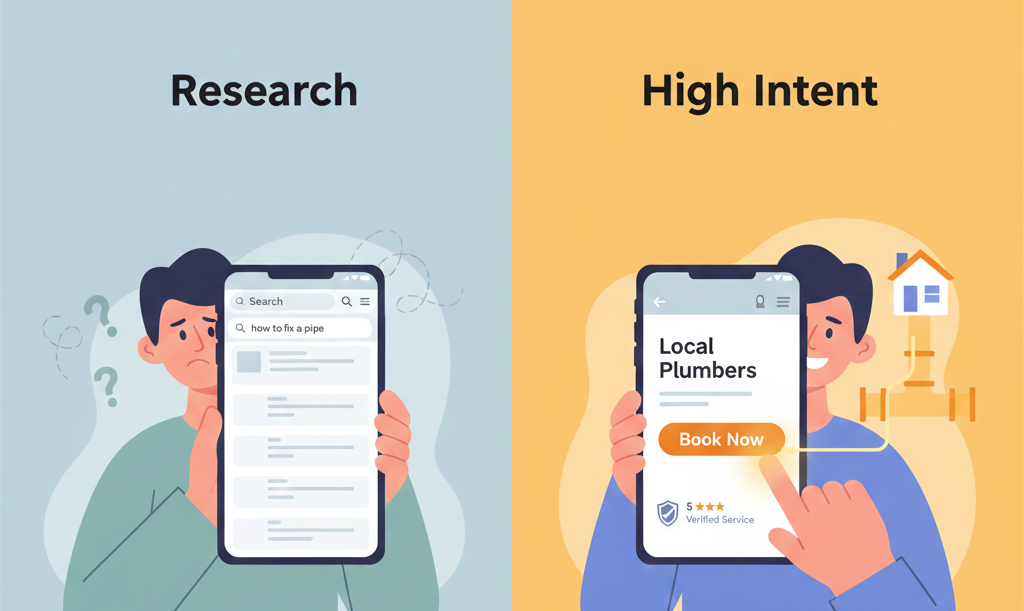
Keywords reveal where prospects fall within the buyer journey. Someone searching “what is SEO” seeks educational information. Another searching “affordable SEO services Boston” signals ready-to-buy intent. Targeting the latter captures customers prepared to make immediate decisions.
Targeting Problem-Aware Keywords
Problem-aware searches indicate prospects who recognize their challenges and actively seek solutions. These keywords include terms like “fix,” “solve,” “improve,” or specific pain points your business addresses.
Service businesses benefit tremendously from optimizing for problem-specific queries. “How to remove wine stains from carpet” attracts homeowners who might need professional cleaning services. “Emergency garage door repair” captures customers requiring immediate assistance.
Mapping keywords to customer awareness stages allows precise targeting of high-value prospects. This strategic approach maximizes conversion rates while minimizing wasted traffic from casual browsers.
Converting Searchers into Qualified Leads
Driving traffic represents only half the equation. Converting visitors into customers requires optimized user experience, compelling calls-to-action, and clear value propositions.
Landing pages must immediately address the search query that brought visitors to your site. Relevant, helpful content builds trust and positions your business as the solution they’ve been seeking. Clear contact options, online booking systems, or quote request forms remove friction from the conversion process.
Mobile optimization proves critical since over 60% of searches now occur on smartphones. Fast-loading pages, click-to-call buttons, and streamlined forms accommodate mobile users’ expectations and behaviors.
Technical Excellence: Mobile-First and Speed Optimization
Technical SEO forms the foundation supporting all other optimization efforts. Search engines cannot rank pages they struggle to crawl, index, or understand. Small businesses often overlook these technical factors, creating unnecessary barriers to search visibility.

Page speed directly impacts both rankings and user experience. Google explicitly uses load time as a ranking factor, and slow sites frustrate visitors who abandon before seeing your content. Every second of delay reduces conversions and increases bounce rates.
Why Core Web Vitals Matter for Small Sites
Google’s Core Web Vitals measure real-world user experience through metrics like loading performance, interactivity, and visual stability. These factors influence rankings and determine whether visitors enjoy seamless experiences on your site.
Small business websites frequently suffer from oversized images, excessive plugins, or poor hosting that degrades performance. Addressing these issues improves both search rankings and conversion rates simultaneously.
Tools like Google PageSpeed Insights identify specific technical issues harming performance. Implementing recommended fixes often requires minimal technical expertise but delivers measurable improvements in visibility and user satisfaction.
Creating a Seamless Mobile User Experience
Mobile-first indexing means Google primarily uses mobile versions of websites for ranking and indexing. Sites that function poorly on smartphones face ranking penalties regardless of desktop performance.

Responsive design ensures your website adapts gracefully to any screen size. Touch-friendly navigation, readable text without zooming, and properly sized buttons create positive mobile experiences that keep visitors engaged.
Local searches occur predominantly on mobile devices, making mobile optimization doubly important for small businesses targeting nearby customers. Seamless mobile experiences directly translate to more phone calls, directions requests, and foot traffic.
Future-Proofing Your Business Against Algorithm Changes
Search engines continuously refine algorithms to deliver better results. These updates sometimes disrupt rankings for businesses using outdated or manipulative tactics. Sustainable SEO strategies focus on fundamental quality that withstands algorithmic evolution.

Creating genuinely helpful content for your target audience future-proofs against updates targeting low-quality material. Google increasingly rewards expertise, authoritativeness, and trustworthiness—qualities authentic small businesses naturally possess when sharing their knowledge.
Adapting to AI-Driven Search Results
Artificial intelligence increasingly shapes how search engines understand and rank content. Featured snippets, knowledge panels, and AI-generated summaries change how information appears in search results.
Optimizing for these features requires structured data, clear answers to common questions, and authoritative content that machines can parse and understand. Small businesses embracing these formats gain visibility advantages as search interfaces evolve.
Voice search and conversational queries continue growing in prevalence. Content addressing natural language questions positions your business for this ongoing shift in search behavior.
Partnering for Measurable Digital Growth
Effective SEO requires expertise, consistent effort, and strategic thinking. Small business owners already juggle countless responsibilities. Partnering with experienced SEO professionals allows you to access specialized knowledge while focusing on core business operations.

Quality SEO services provide transparency through regular reporting and clear communication about strategies, progress, and results. You should understand exactly what work occurs and how it drives business outcomes.
Tracking KPIs That Actually Impact Revenue
Vanity metrics like total traffic mean little without qualified leads and sales. Effective SEO strategies track metrics connected to revenue: conversion rates, qualified lead volume, local pack appearances, and phone calls from organic search.
These performance indicators reveal whether SEO investments generate tangible returns. Regular analysis identifies opportunities for refinement and demonstrates clear ROI on your marketing spend.
Scalable SEO Strategies for Service Providers
Service-based businesses benefit from SEO approaches that scale alongside company growth. Creating location-specific pages, service category content, and educational resources builds visibility across multiple search queries simultaneously.
This scalable approach generates compounding returns as your content library grows. Each optimized page represents another entry point for potential customers discovering your business through search.
How long does SEO take to show results for small businesses?
Most small businesses see initial improvements within 3-4 months, with significant results developing over 6-12 months. Timeline varies based on competition, current website status, and optimization consistency.
Can small businesses compete with larger companies through SEO?
Absolutely. Small businesses succeed through niche targeting, local optimization, and focused keyword strategies that larger competitors overlook. Geographic relevance and specialized expertise create competitive advantages.
What is the difference between SEO and Google Ads for small businesses?
SEO builds long-term organic visibility without ongoing costs per click, while Google Ads provides immediate paid placement. SEO creates sustainable assets; ads require continuous spending for continued visibility.
How much should small businesses budget for SEO services?
Investment varies based on competition and goals, but most small businesses see effective results with $1,000-$3,000 monthly for comprehensive services. This proves significantly more cost-effective than equivalent paid advertising over time.
Is local SEO different from regular SEO?
Local SEO emphasizes geographic relevance, Google Business Profile optimization, and proximity-based searches. It targets customers in specific locations rather than broader audiences, making it essential for service businesses and retail stores.
CONCLUSION
SEO for small business isn’t just another marketing expense, it’s a strategic investment that builds compounding value over time. While competitors drain budgets on temporary paid placements, your optimized digital presence works continuously to attract qualified customers without escalating costs.
The question isn’t whether your business needs SEO it’s whether you’ll claim your market position before competitors do. Search visibility compounds over time, creating increasingly difficult advantages for early movers to overcome. Starting today positions your business for sustained growth tomorrow.
Ready to stop renting visibility and start building digital assets that appreciate? Our data-driven SEO strategies help service-based and local businesses like yours rank faster and convert more leads. We create customized roadmaps that align with your budget, timeline, and growth objectives delivering measurable results without the guesswork.
Let’s talk about transforming search engines into your most productive sales channel. Schedule a free consultation to discover exactly how SEO can reduce your ad dependency while accelerating sustainable business growth. Your competitors are already investing in organic visibility. The real question is: can you afford not to?